
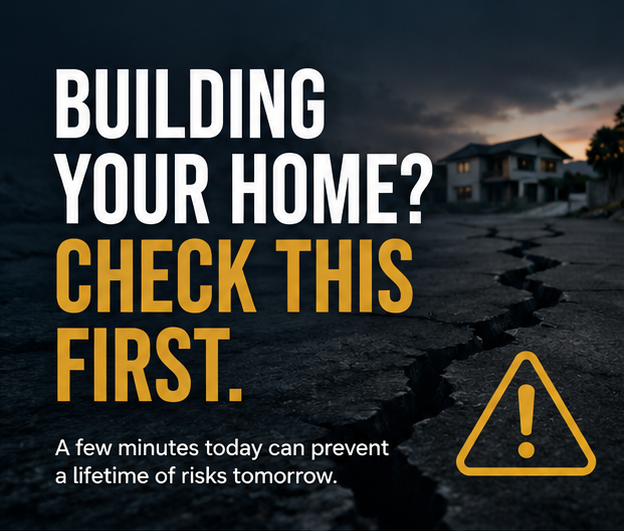
The safest building isn’t the one that survived yesterday’s earthquake. It’s the one that was designed for tomorrow’s.
Recent earthquakes remind us of something important.
Structural design is more than concrete, steel, and columns.
Every building is analyzed using different load combinations, including:
✔ Dead Loads
✔ Live Loads
✔ Wind Loads
✔ Earthquake Loads
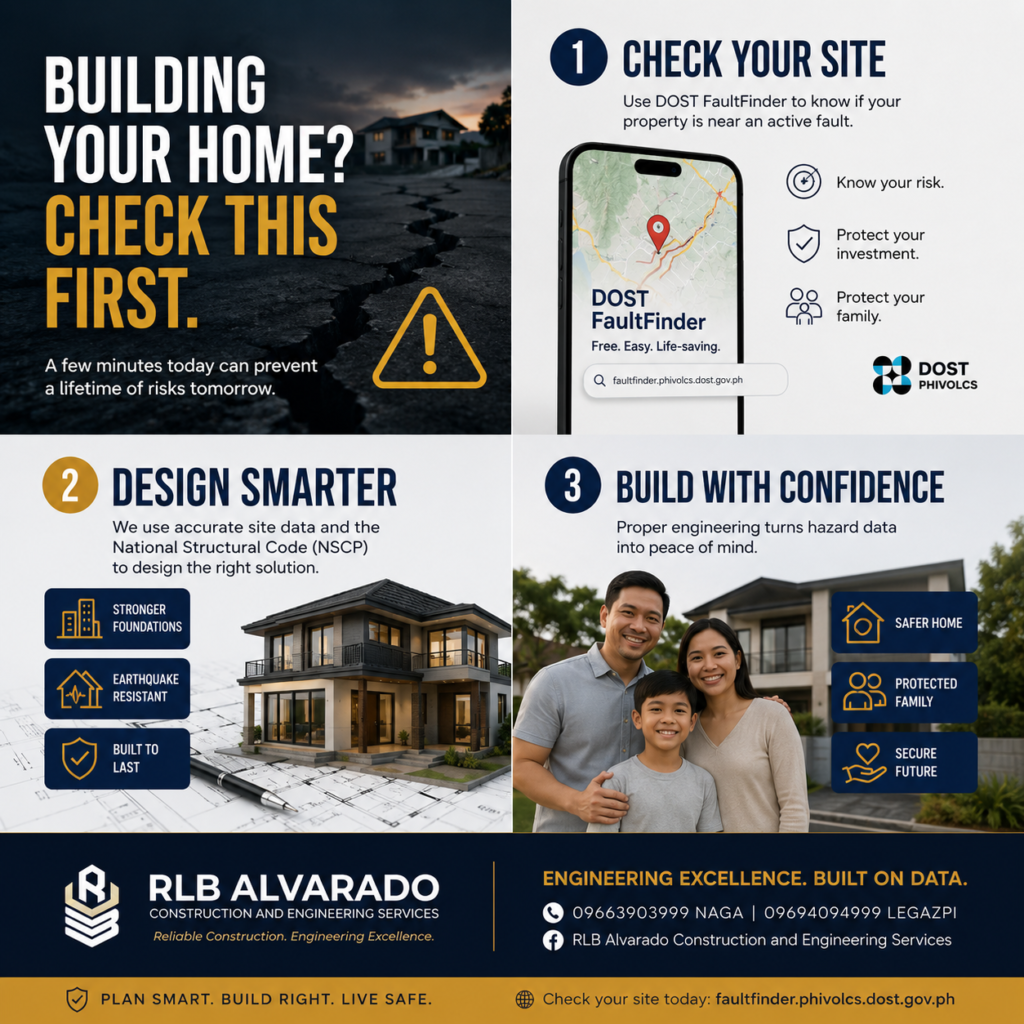
These are not estimates or guesses. They follow the National Structural Code of the Philippines (NSCP) to help ensure structures perform as intended during seismic events.
Recently, we designed a residence in Libon, Albay and completed a 2-storey mixed-use building in Pio Duran. These areas require careful structural consideration, including seismic design.
If you’re planning to build, don’t base your decisions on today’s weather.
Build for the earthquake that hasn’t happened yet.
Because when safety is compromised to reduce cost, the real price may be far greater.
𝗘𝗮𝗿𝘁𝗵𝗾𝘂𝗮𝗸𝗲𝘀 𝗮𝗿𝗲 𝘂𝗻𝗽𝗿𝗲𝗱𝗶𝗰𝘁𝗮𝗯𝗹𝗲. 
𝗬𝗼𝘂𝗿 𝗱𝗲𝘀𝗶𝗴𝗻 𝘀𝗵𝗼𝘂𝗹𝗱𝗻’𝘁 𝗯𝗲. 
Every structure should be engineered (EARTHQUAKE-Ready Design) based on its location, soil conditions, and the National Structural Code of the Philippines.
RLB Alvarado Construction and Engineering
Reliable Construction. Engineering Excellence.